This website provides information about some of the people who came from Italy to the United States in the early 20th century — and about their families.
Most of the Italian ancestors described in this website first arrived in the USA between 1880 and 1920. They were part of an emigration wave that you can learn more about from the Wikipedia article Italian diaspora. While this article discusses the general reasons for emigration from Italy, they do not necessarily explain the decisions of individual people. In some cases, we have family stories about such decisions, while in other cases we can only guess.
The articles below are in chronological order of their posting, with most recent first. In addition, links to these articles are included in pages for specific families (identified by surname) and for topics related to Italian ancestry. To help you navigate the site, there are menus and a search box. For example, to find a specific person, start by looking under surnames in the menu or use the search feature.
Once you’ve gotten to a specific page, you may find links on it to other people and related topics. In addition, if there are separate articles relevant to that page, you will see excerpts which you can click on to expand. This allows you to find articles of interest without having to go through the chronological posts.
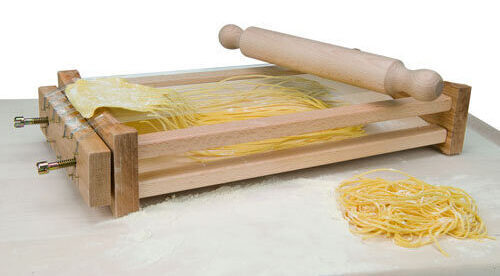
In the Abruzzo region, spaghetti was made traditionally by cutting fresh pasta dough using a tool known as a chitarra (pronouced kee-TAHR-rah). The word “chitarra” translates into English as “guitar,” a word that can mean either a musical instrument or a wired frame used in the kitchen for cutting soft things like dough or jelly candy. In the Abruzzo region the wires of the chitarra are close together, producing a noodle that is thinner than similarly produced pasta of other regions.
You can watch the video, provided by Experience BellaVita, to see how a rolling pin is used to push the pasta dough through the wires of the chitarra.
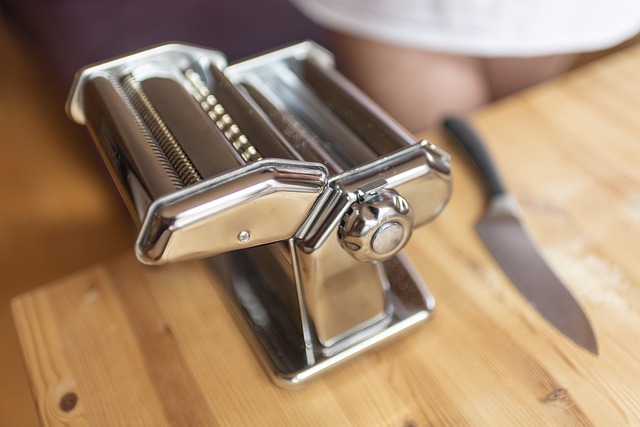
The square-cut edges of pasta made this way contrast with the cylindrical shape of extruded spaghetti. The resulting geometry allows chitarra spaghetti to hold more sauce. This same geometry can be achieved using a more modern pasta machine with a narrow-spaced spaghetti cutter built-in or as an attachment. However the cut is achieved, this traditional fresh pasta is often served with a tomato sauce and tiny meatballs called pallottine. Alternatively, another traditional sauce for spaghetti alla chitarra is a mixed-meat ragù that often contained lamb, since the Abruzzo region had a long tradition of sheep herding.
Scrippelle
In the Abruzzo region, thin pancakes or crepes made from flour, eggs and water are known as “scrippelle.” When rolled up, sprinkled with grated cheese and served in a bath of chicken broth, they are scrippelle ’mbusse. When layered with cheese, sauce and various other ingredients (which can include meat, vegetables, chopped hard-boiled egg, and rice) then baked, you have timballo alla Teramana. Both of these dishes originate from the area around Teramo, so you also may see scrippelle ‘mbusse referred to as “Teramana.”
In the area around Chieti, which is also in the Abruzzo region, you might hear the word “scrippelle” used to describe a Christmas treat made by frying batter or dough and then (usually) finishing it with sugar. You might also hear these sweet fritters called “crispelle” or “crustele”. Recipes vary, along with linguistic customs, sometime at a surprisingly local level. When in the Abruzzo region, to avoid confusion, you might want to refer to the savory thin pancakes as “scrippelle Teramana” and talk about the Christmas treat by specifying that they are “fritte” (fried) and “dolci” (sweet).
In other parts of Italy, the savory thin pancakes are called “crespelle,” and they are often rolled around a filling and baked liked cannelloni. One classic version is crespelle alla fiorentina, which uses a filling of ricotta and spinach. In the Abruzzo region, the filling might include various combinations of cheeses, vegetables and meat and be described as “scrippelle in forno.”
Gnocchi di Patate
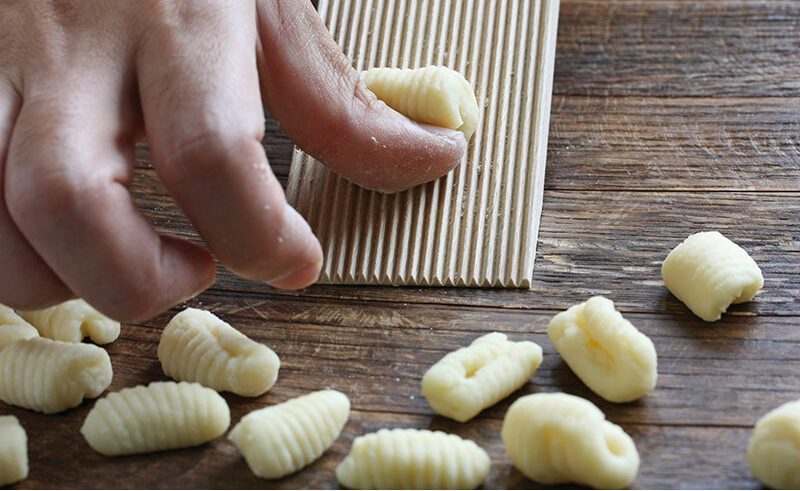
The traditional gnocchi of Abruzzo are made with potatoes, flour and egg. After the ingredients are mixed, the dough is shaped into long thin ropes and cut into small pieces (about 3/4 inch). These are then rolled on a gnocchi board, as shown in the photo, to create surfaces that will hold a sauce. In the old dialect of the Teramo area these are called “li surgitt’.”
Gnocchi Roller-Ridger Paddle available for purchase from Destination Abruzzo
Caggionetti
Caggionetti are crescent-shaped filled and fried pastries, commonly found as a Christmas sweet in Abruzzo, especially in the area around Teramo. They are now officially recognized as one of the region’s traditional food products (PAT). Historically, the dough was made from flour, olive oil, and dry white wine (with a little water as needed), and rolled into a paper-thin sheet. Some dough recipes now include egg, but this is a modern addition to a recipe from a time when resourceful frugality was the rule. The filling, however, provided a bit of luxury with ingredients such as cocoa and cinnamon mixed into chickpea or chestnut purée, along with a sweetener of grape must (mosto cotto) or honey. Other ingredients were added according to local or family recipes and might include grated dark chocolate, toasted nuts (almonds, hazelnuts, walnuts), orange peel, dried or candied fruit (e.g., citron), a bit of liqueur — or other creative choices. Once crimped shut, the little crescents are fried in olive oil until the pastry shell turns light and crisp, then finished with sugar, honey, or caramelized grape must and allowed to cool.
A Christmas Sweet with Many Names
Few Italian sweets are spelled and said so many different ways. In the Teramo area they are caggionetti or, in older dialect, li caggiunitt’. In other areas they may be called caggiunitte,caggiune, calgionetti, calcionetti, calcione, calciuni, cauciuni, cavicioni, caveciune, cavazune, cavazuni, ceci ripieni — and perhaps other names not discovered by this author.
There seems to be no specific linguistic research on the origins of the word caggionetti. However, a likely possibility is that it evolved from calcione, a word that is generally connected to calzone, from calza (‘stocking’), suggesting the pastry’s shape inspired its name. Following patterns of linguistic change typical in the Teramo area, the lc sound was replaced with the gg sound, i.e., calcione > caggione. To indicate a small object, the diminutive -etti was added, i.e., caggione > caggionetti. Some additional linguistic changes common in the old southern Italian dialect of Teramo would then transform i caggionetti to li caggiunitt’ (with the apostrophe indicating a short, soft vowel sound that may not be explicitly heard). 1 Similar linguistic drift shaped by other southern Italian dialects could explain the origins of the many other words used to describe this traditional type of Christmas pastry.
The use of li rather than i for the plural article (i.e., “the”) is a classic indicator of a southern Italian dialect of the Neapolitan type. The changes from -ion to -iun and from -ett to -itt are examples of what linguists call “vowel raising” because it results from the tongue being placed closer to the roof of the mouth. A further change, when the vowel at the end of a word becomes a short, soft sound, is a form of “vowel reduction” known as “reduction to schwa.” A complete dropping of the final vowel would be called apocope, but listening closely to the speech of older family members who came from the Teramo area suggests that this is not quite what is happening. However, the schwa can be difficult to hear in everyday speech. ↩︎
Sweet crescents of chickpea-and-chocolate filling wrapped in a crisp wine-and-oil dough — the traditional dolce di Natale of Abruzzo. Makes about 40 pastries.1
The Filling
Ingredients
300 g dried chickpeas, soaked overnight and boiled until very soft (or about 600 g cooked/canned chickpeas, rinsed and simmered 15 minutes)
60 g unsweetened cocoa powder
80 g dark chocolate, finely grated
1 tsp ground cinnamon
Zest of 1 orange (organic, unwaxed)
50 g candied citron, finely diced
80 g walnuts, chopped
100–130 ml mosto cotto (cooked grape must) or mild honey, to taste
Pinch of salt
Preparation
Drain the chickpeas well and pass them through a food mill or sieve (or pulse in a food processor) to obtain a smooth, fairly dry purée. Removing the skins gives a finer texture.
Transfer the purée to a bowl and mix in the cocoa powder, grated chocolate, cinnamon, orange zest, candied citron, walnuts, and salt.
Add the mosto cotto or honey gradually, mixing until the filling holds together and is softly scoopable — it should be thick enough to hold its shape on a spoon, not runny. Adjust sweetness to taste. (A tablespoon of liqueur such as rum or mistrà is a traditional option, but optional.)
Cover and let the filling rest while you make the dough — at least 30 minutes — so the flavors meld and the chocolate softens.
The Dough
Ingredients
500 g all-purpose flour (Italian tipo 00)
100 ml extra-virgin olive oil
150 ml dry white wine
Pinch of salt
A little water, as needed
(Optional, not traditional: ½ tsp baking powder for a lighter, blistered shell)
Preparation
Mound the flour on a work surface with the salt (and baking powder, if using) and make a well. Pour in the olive oil, then the wine.
Work the liquids into the flour, then knead for 8–10 minutes, adding water a teaspoon at a time only if needed, until you have a smooth, supple, elastic dough. It should feel silky, not sticky.
Wrap the dough and let it rest at room temperature for at least 1 hour (or refrigerate up to a day; bring back to room temperature before rolling).
Assembly and Frying
Roll the dough as thin as possible — thin enough to almost see your hand through it, about 1 mm. This thinness is the signature of a good caggionetto.
Cut circles about 7–8 cm in diameter (a water glass or cutter works well). Gather and re-roll the scraps.
Place a scant teaspoon of filling slightly off-center on each circle. Fold over into a half-moon, press out the air, seal the edge firmly, and crimp with the tines of a fork. Seal well — the filling escaping into hot oil is the classic disaster of the novice caggionetto-maker.
Heat about 3 cm of olive oil in a wide pan to ~175 °C (350 °F) — a scrap of dough should sizzle immediately but not blacken. Fry the pastries a few at a time, turning once, until golden and lightly blistered, about 1–2 minutes per side.
Drain on paper towels. While still warm, dust generously with regular cane sugar.
Notes
Serving and keeping: Best eaten the day they are made, while the shell is crisp and shatteringly light; they soften pleasantly by the next day and are still good for several days stored in a tin. The sugar adheres best when dusted while warm.
Chestnut variation: The other classic Teramo filling substitutes roasted, sieved chestnuts for the chickpeas.
Tradition: Historically these were first served after Midnight Mass on Christmas Eve; today they appear as soon as the chestnut season begins.
This recipe was created in collaboration with Lumo, Proton’s AI writing assistant, based on traditional Abruzzese techniques.↩︎
This website provides a listing of people who came from Giulianova to the USA between 1902 and 1930. The index provides links to subpages which contain lists of names, alphabetized by surname.
This website with Brooklyn Genealogy Information is a great help for researching immigrant ancestors who lived in Brooklyn. For example, because the census enumeration district maps for Brooklyn are very difficult to navigate and read, the page on the 1900 Federal Census Enumeration Districts is very helpful.
FamilySearch.com currently provides access to census enumeration district maps for 1900 – 1940. This can be very useful if you want to find the census record for a particular location.
While various website for genealogical research provide a search feature to help you census records for a particular person, there is no comparable way to search by location. If you want to find the record for a particular address, you need to narrow the search geographically to a set of records small enough work with. Sometimes this is easy. For example, the 1880 census record for Dennison, Ohio comprises 25 pages, making it feasible to read through the entire record to look for a particular address.
For larger places, such as Columbus, Ohio, this approach becomes considerably more labor intensive. In 1850, for example, Columbus was divided into five wards, and the census records for Ward 1 alone comprises 92 pages. By 1860, the census records for Ward 1 had grown to 127 pages. For 1880 and on, census records for Ohio are organized into sets by enumeration district. This makes it a bit easier to search for a particular address, provided you know the enumeration district for that address. That is difficult to determine for 1880 (and Ohio census records for 1890 were destroyed by fire), but for 1900 and beyond, the enumeration district maps are a great help. Even so, the process can be difficult. The maps cited above are broken into sections that often are not labeled, so it takes a while to find the relevant map for a specific area in a given census year.
When doing research on ancestors, you may find different spellings of their name in various documents. It is only in recent times that the spelling of surnames has become standardized, so the spelling you see in documents often reflects an imperfect phonetic rendering. In addition, immigrants sometimes decided to modify their names after coming to the USA.
One way to deal with variations is to look for a standardized spelling that’s used in Italy today. If you find several possibilities, it can be helpful to look at geographical distribution and frequency. There are several websites that provide such information.
There are two sites that can display maps showing the frequency of a surname in each region of Italy: The Italian Last Names Map has an interactive map with English instructions and information. The GENS cognomi search page is written in Italian, but it’s easy to use and has several nice features, including maps showing surname distribution in the USA as well as in Italy. The GENS search also seems to use a more comprehensive database of surnames.
The Italia.InDettaglio surname search provides an interactive form that can be used to get detailed information about the distribution of surnames within the various regions of Italy. (NOTE: This web page can be very slow to load, so give it some time.)
In the early 20th century, there were four brothers of surname De Matteis who came from Giulianova, Italy to the USA: Domenico, Antonio, Cesare and Alfredo. Their parents were Guiseppe De Matteis and Splendora Brancioroli.
Antonio lived for a number of years in the USA and Canada, but ultimately returned to Italy. Domenico, Cesare and Alfredo all remained in the USA and raised families in Columbus, Ohio. From the 1920s through the early 1940s, they lived in a neighborhood near St. Dominic’s church. That neighborhood has since been redeveloped, so their houses are gone and the streets have changed. Starting in the mid-1940s, the families began to move to other parts of town, generally staying north of the downtown area.
On May 24, 1899 the ship Aller arrived at the port of New York, having departed from Haples on May 12. It’s passengers included three men from Parenti1 who appear to have been travelling together. which is a comune (town) in the province of Cosenza in the Calabria region of southern Italy.
One of those men was Carmine Bianco. Although the handwriting on ths ship’s record is difficult to make out, the other two appear to have been Carmine Agnotti and Serafino Sorianini. All three men gave their final destination as Brooklyn, and all indicate that this is not their first visit to the USA. In this record, Carmine Bianco reports that he previously lived in Brooklyn from 1893-1896 and other records indicate that he first came to the USA in 1890. Thus Carmine is probably the first person from the Dominico Bianco family tree to immigrate to the USA.
Parenti is a comune (town) in the province of Cosenza in the Calabria region of southern Italy. ↩︎